
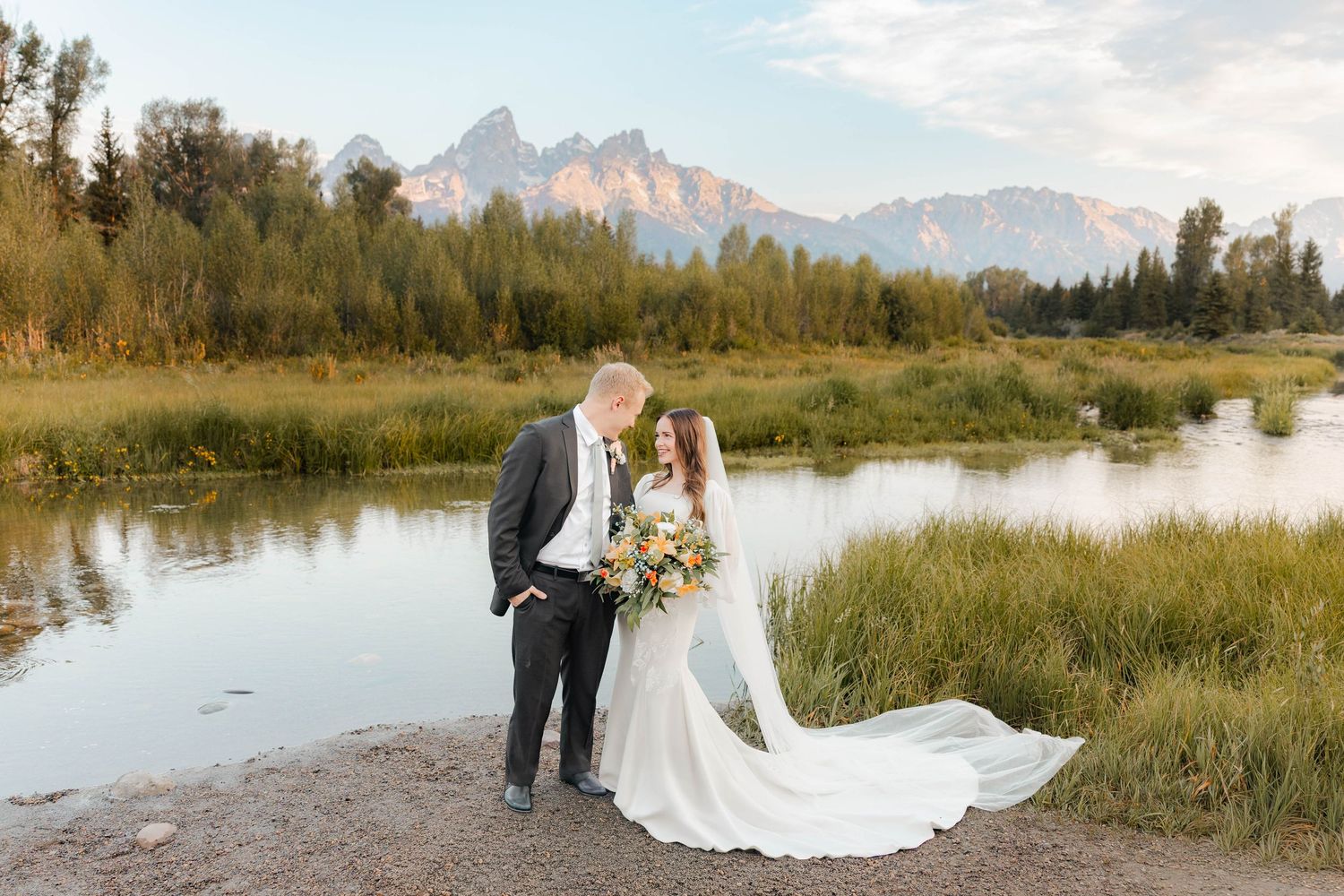
Grand Teton National Park Elopement Planning Guide
Planning your Grand Teton elopement doesn't have to be complicated.
The Tetons have a way of making you feel like you've stepped into a painting. Towering mountains, winding rivers, quiet forests, glassy lakes, wide-open grasslands, and landscapes that almost look like the desert—all within one incredible corner of Wyoming. It's hard not to look around and be reminded of just how creative God is.
And the best part? There's no single way to experience it.
Maybe you're dreaming of a summer morning with the mountains glowing in the sunrise. Maybe you picture golden autumn grasses, a little snow falling around you, or a celebration with your closest people. Maybe it's just the two of you, ready to say your vows somewhere that feels a world away from everything else.
Whatever your vision looks like, a Grand Teton elopement can be an incredible adventure.
Planning one can feel a little more complicated than the actual getting married part, though. Between ceremony permits, guest limits, seasonal road closures, and figuring out where everything fits into your day, there's plenty to navigate.
That's why I've put together this guide: to help you understand your options, make informed decisions, and spend less time stressing over logistics and more time looking forward to your wedding.
And if you get halfway through and decide you'd rather have someone help you figure it all out? That's what I'm here for, too.
First, what kind of Grand Teton elopement are you dreaming of?
One of my favorite things about photographing weddings here is how different two days in the same park can look. The landscape offers so many possibilities that your guest count, preferred season, and idea of adventure can help guide the planning process.
You don't need to know the exact location yet. Start with what matters most to you.
A dramatic mountain backdrop?
The Teton Range is the star of the show, with sweeping views, towering peaks, and those incredible sunrise and sunset colors. If you want the mountains to be front and center, we'll look at ceremony locations that offer the views you're dreaming of.
Water, reflections, and a little more variety?
Lakes, rivers, and streams bring a different feel to the landscape. Depending on the location and conditions, you might have mountain reflections, open shorelines, or the sound of moving water in the background.
Wide-open fields and a more rustic feel?
The park's grasslands and historic landscapes offer expansive views and a distinctly Wyoming atmosphere. They're beautiful in their own way, especially when the light starts changing toward the end of the day.
Forests, changing seasons, or something a little unexpected?
The landscape transforms throughout the year. Spring brings fresh greens and bursts of wildflowers, summer offers warmer weather and colorful scenery, and fall brings golden grasses and changing foliage. Winter introduces an entirely different atmosphere, with snow-covered landscapes and a quieter, more dramatic feel.
You don't have to pick your exact spot from a list on the internet. In fact, I'd rather help you choose a location that fits your actual wedding than have you feel pressured to choose one simply because it looks beautiful in a photograph.
When should you elope in the Tetons?
Honestly? You really can't go wrong with a time of year just because it's different from what you originally pictured. Every season brings something special, and the right choice depends on the experience you want.
Spring: Fresh greens and new beginnings
Spring brings fresh color to the landscape, with emerging greenery and seasonal wildflowers. It can also bring lingering snow, muddy conditions, and changing access as the park transitions out of winter.
Summer: Warmer weather and colorful landscapes
Summer is a popular time to visit, with greener scenery, wildflowers in season, and generally more options for exploring the area. Popular places can be busy, so planning your ceremony location and timeline thoughtfully is important.
Fall: Golden grasses and changing colors
September and October can bring beautiful autumn colors, cooler temperatures, and a different feel to the landscape. Fall is one of my favorite reminders that the Tetons don't need bright summer greenery to be beautiful. Snow can arrive early, and road and site access may change with the season.
Winter: Snow, quiet landscapes, and a different kind of adventure
A winter elopement can be absolutely beautiful. Snow changes the entire look of the landscape, and the mountains can feel especially dramatic against a white backdrop. It also requires more flexibility with access, parking, temperatures, and travel time.
No matter when you visit, sunrise and sunset are worth considering. At sunrise, the mountains can glow as if they're on fire. At sunset, the changing light can create a colorful halo around the peaks.
Wildlife can be present throughout the year, too. Dawn and dusk are often productive times for wildlife viewing, although sightings are never guaranteed. Keep a respectful distance from animals and follow all park wildlife guidance.
My biggest advice? Choose a season for the experience you want, not because you think there's only one season worth getting married in.
A few things to know before choosing your location
The Tetons are breathtaking, but they're also a real, working national park—not a private wedding venue. There are a few things that can affect your plans, and knowing about them early makes the whole process easier.
Ceremony permits and guest limits
Grand Teton National Park has designated ceremony locations with specific group-size limits, along with a separate process for certain smaller dispersed ceremonies. Not every beautiful area is approved for weddings, and each permit type has its own restrictions.
Before committing to a location, check the current rules, permitted group size, application process, and availability.
Travel takes longer than you might expect
Always leave room for driving between locations, parking, walking to your ceremony spot, and getting everyone where they need to be. Wildlife can slow traffic unexpectedly, and stopping to admire the views has a way of happening, too.
Pack snacks and water, and give yourselves breathing room in the timeline. Your wedding day shouldn't feel like a race to get from one place to another.
Expect to share the park
Even beautiful, less-crowded locations are generally public spaces. You may encounter other visitors, and a ceremony permit does not automatically give you exclusive use of an area.
If privacy is a major priority, we'll talk through what that means for your location options and timing. I can help you plan for a more intimate-feeling experience, but I won't promise that a public place will be empty.
Weather is part of the adventure
Mountain weather can change, and conditions may look different from what you expected when you booked. Flexible plans, appropriate clothing, and realistic travel buffers go a long way.
A change in weather doesn't automatically mean a disappointing wedding day. It just means we plan thoughtfully for the conditions.
Okay, so where do you actually get married?
This is where the permit research begins. Your guest count, preferred location, and ceremony style will help narrow down the options.
I've put together a separate resource covering the designated Grand Teton ceremony locations, their group-size limits, permit information, and links to the official application instructions.
[Explore the Grand Teton Wedding Permit Guide →]
Start there if you're ready to compare the locations and understand how the application process works. Permit availability and restrictions can change, so always confirm the current details with the National Park Service before making plans.
And if the permit process is already making your head spin, take a breath. You don't have to become a national park wedding expert just to get married here.
Let's figure out your elopement
Here's the thing: you don't need to arrive with every detail figured out. You don't need to know which location is best, which timeline will work, or how to fit everything into one day.
That's something we can work through together.
Which of these sounds most like you?
**A.** *Just the two of us.* We want an intimate adventure, beautiful scenery, and room to be present with each other.
**B.** *Our favorite people, too.* We're bringing family or friends and need a ceremony location that works for our group.
**C.** *We're dreaming big, but we're overwhelmed.* We have a vision, but the permits, locations, timing, and logistics feel like a lot.
**D.** *We have absolutely no idea yet.* We just know we love the Tetons and want to get married here.
There's no wrong answer. Your choice simply helps us figure out where to begin.
If you chose A, B, C, or D, the next step is the same: let's talk about your vision, your guest count, and what matters most to you.
[Let's Plan Your Grand Teton Elopement →]
You don't have to figure it all out before reaching out. Tell me what you're dreaming of, even if it's still a jumble of ideas, and we'll start there.
Your biggest adventure begins here.